Osaka Otaku Travel Guide
A Walk Through Osaka’s Otaku Town
A rainy Sunday walk through Nipponbashi, Osaka — from Otaku Road to the covered shopping arcade, second-hand shops, VTuber stores, doujin shelves, figure showcases, and the small details that make the district feel real.
Osaka’s Nipponbashi is often described as the Kansai version of Akihabara. That comparison is useful, but it can also make the area sound simpler than it really is. Nipponbashi is not only a place with anime shops. It is a layered district where old electronics streets, second-hand stores, doujin culture, figure shops, VTuber goods, tourists, local fans, and ordinary rainy-day shopping all overlap.
I walked through the area on a rainy Sunday, mainly around Otaku Road and the covered shopping arcade nearby. I had originally wanted to photograph more open street views of Otaku Road itself, including stores such as Animate. But the rain changed the route.
That accident made the walk more interesting. Instead of a clean tourist postcard, the day showed something more local: people escaping into the arcade, wet sidewalks, crowded shop entrances, slippery pavement, second-hand shelves, narrow aisles, and the feeling of a real otaku district being used by real people.
This Was Not a Perfect Sunny-Day Walk
Many travel articles show Japan in bright weather: blue sky, clean streets, open storefronts, and carefully framed views. That is not how this walk felt.
It started as an ordinary visit to Nipponbashi, but the weather gradually pushed people away from the uncovered streets and toward the arcade. The covered shopping street became denser than expected. People slowed down near shop entrances, umbrellas folded and opened, shoes tracked water across the floor, and the ground had that slightly dangerous rainy-day shine.
This kind of atmosphere is hard to understand from official tourism photos. Nipponbashi is not only a destination. It is a place you physically move through — sometimes while avoiding puddles, bicycles, narrow passages, and people stopping suddenly in front of a store display.
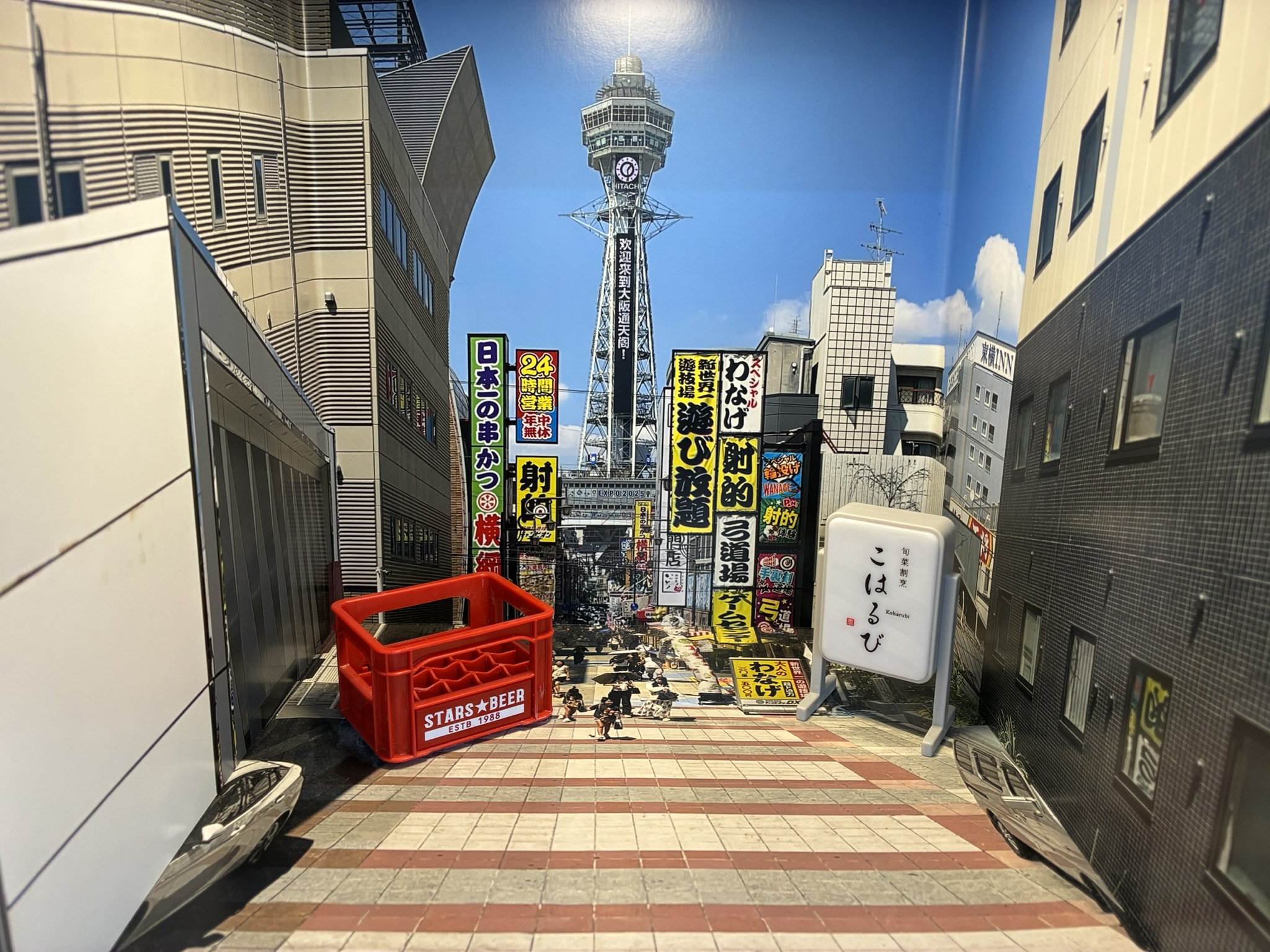
Photo by the author.
Starting Around Nipponbashi
One reason Nipponbashi feels different from Akihabara is scale. Akihabara feels like a famous national symbol. Nipponbashi feels more local, closer to Namba, Den Den Town, small side streets, and everyday Osaka movement.
The district still carries traces of its older identity as an electronics area. But today, anime shops, hobby stores, second-hand goods, game-related shops, manga shelves, figures, card goods, and VTuber merchandise have become much more visible to casual visitors.
On a rainy Sunday, that mixture becomes very clear. The street is not empty, but people do not move in the same way they do on a sunny day. They choose roofs, shortcuts, station exits, covered passages, and store interiors.
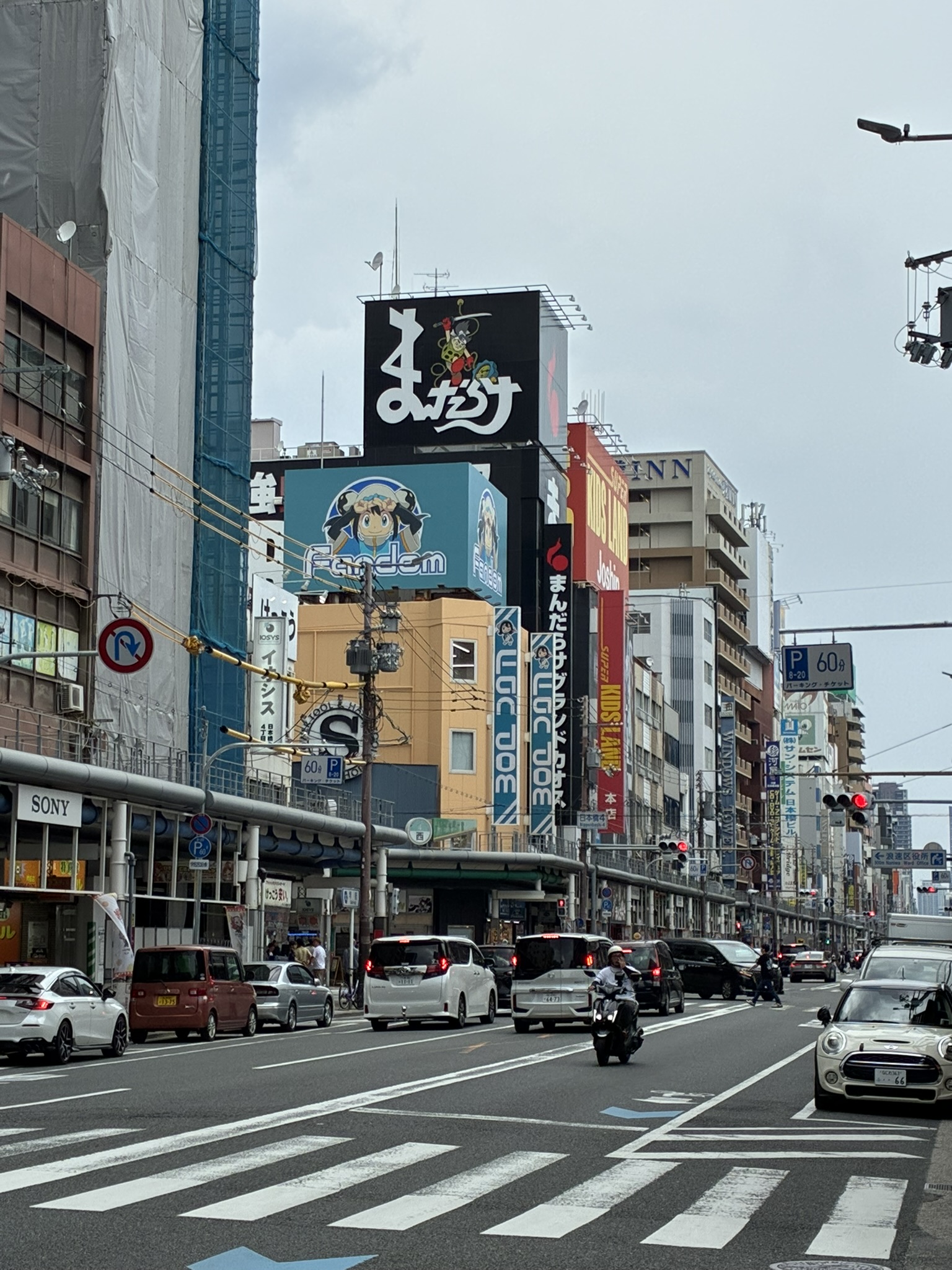
Photo by the author.
Otaku Road Looks Different When It Rains
Otaku Road is one of the best-known parts of Nipponbashi for anime, manga, games, figures, cosplay goods, and hobby shops. On a dry day, it is easier to walk slowly, look across the street, photograph storefronts, and feel the open-air atmosphere of the district.
In the rain, the balance changes. The uncovered parts of Otaku Road become less comfortable. People move faster, stop less often, and often shift toward covered areas or indoor shops. The street still has the same otaku identity, but the rhythm becomes more practical.
This is a small point, but it matters for visitors. If you want clean photos of shop exteriors, clear street views, and a relaxed walk, dry weather is much better. If you want to see how the district actually behaves when the weather is not ideal, a rainy day has its own value.
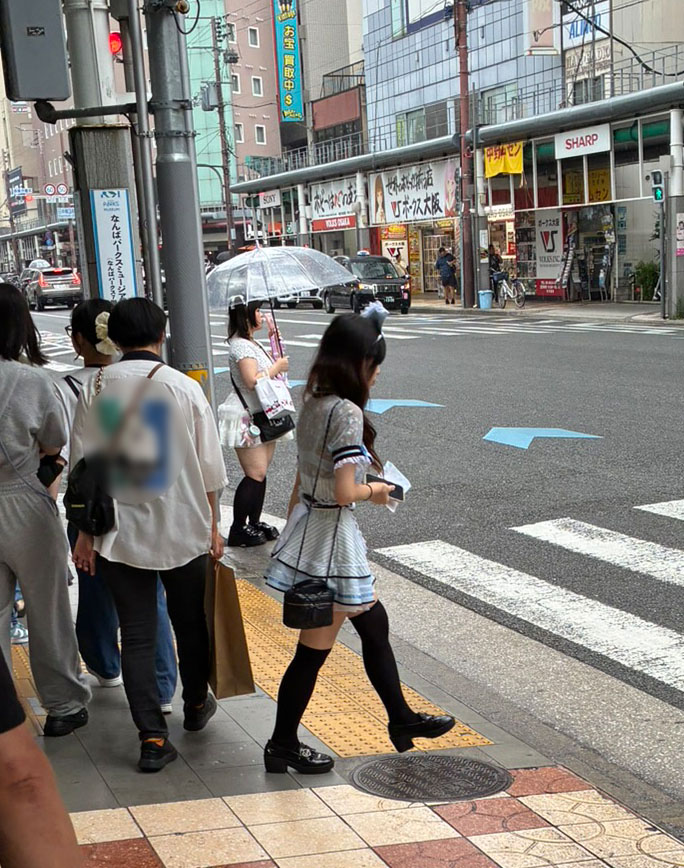
Photo by the author.
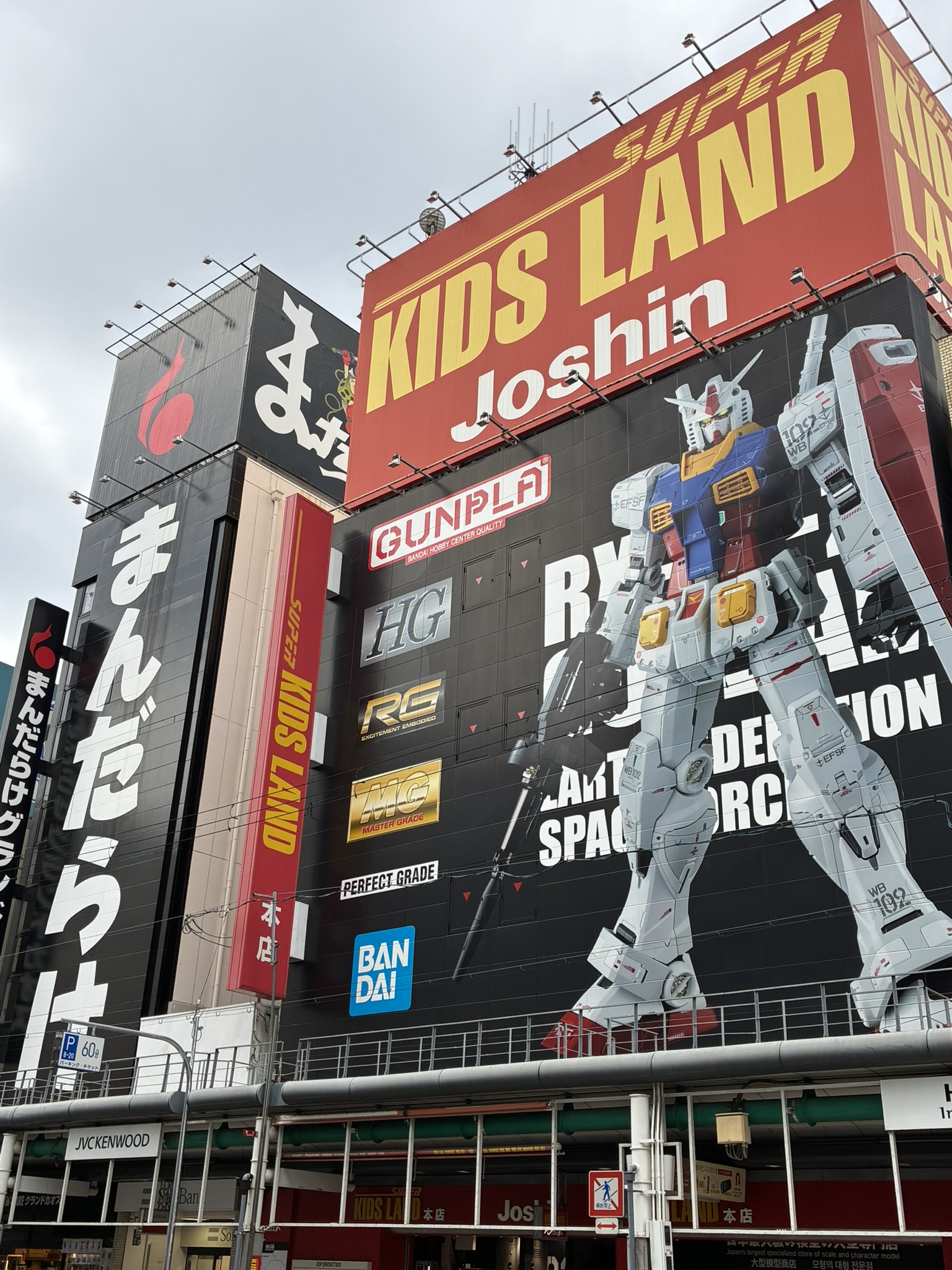
Photo by the author.
Rainy-Day Practical Note: Watch Your Feet
This is not the kind of detail that usually appears in polished travel guides, but it is worth saying: rainy Nipponbashi can be slippery.
Some sidewalks, tiled areas, shop entrances, and arcade floors become slick when many people walk through them with wet shoes and umbrellas. Even ordinary sneakers or sandals may feel less secure than expected. It is not a dramatic danger, but it is the kind of small physical detail you notice only when you actually walk there.
If you visit on a rainy weekend, move a little slower near shop entrances, station exits, curb edges, and places where people suddenly stop to check signs or fold umbrellas.
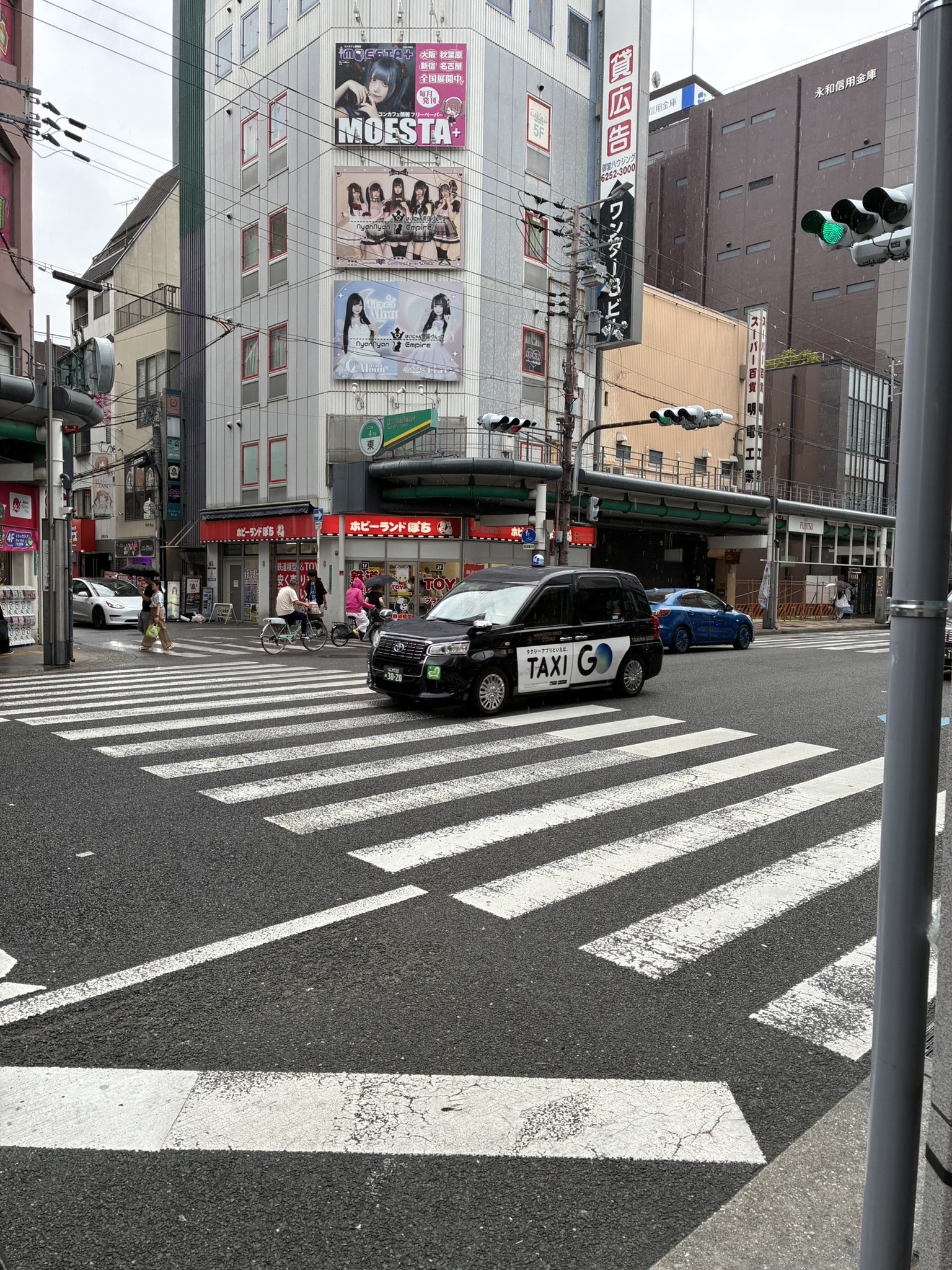
Photo by the author.
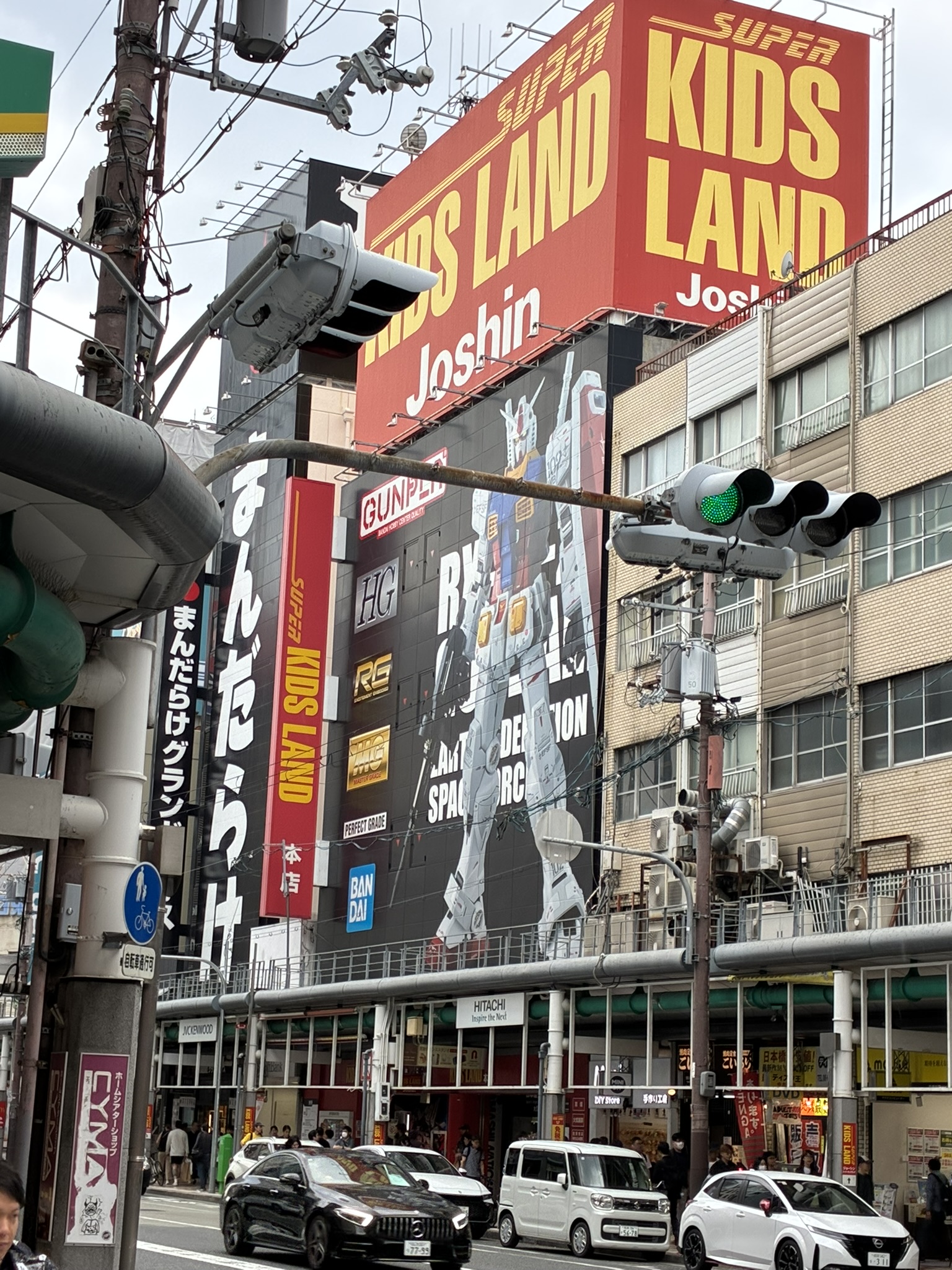
Photo by the author.
The Covered Arcade Becomes the Main Route
Once the rain becomes stronger, the covered shopping arcade starts to feel like the real center of movement. This is especially true on a Sunday. People gather under the roof not only because they want to shop, but because it is simply easier to move there.
The result is a very specific kind of crowd. It is not the same as a festival crowd, and it is not the same as a station rush. It is a slow, compressed stream of shoppers, tourists, fans, local people, umbrellas, bags, and people checking storefronts while trying not to block the path.
For Otaku Explorer, this kind of scene is important. It shows that otaku culture does not exist only in fantasy images. It exists in crowded covered streets, narrow shop aisles, wet shoes, and people deciding whether to step into Mandarake, FANDOM, a figure shop, or a second-hand book section.
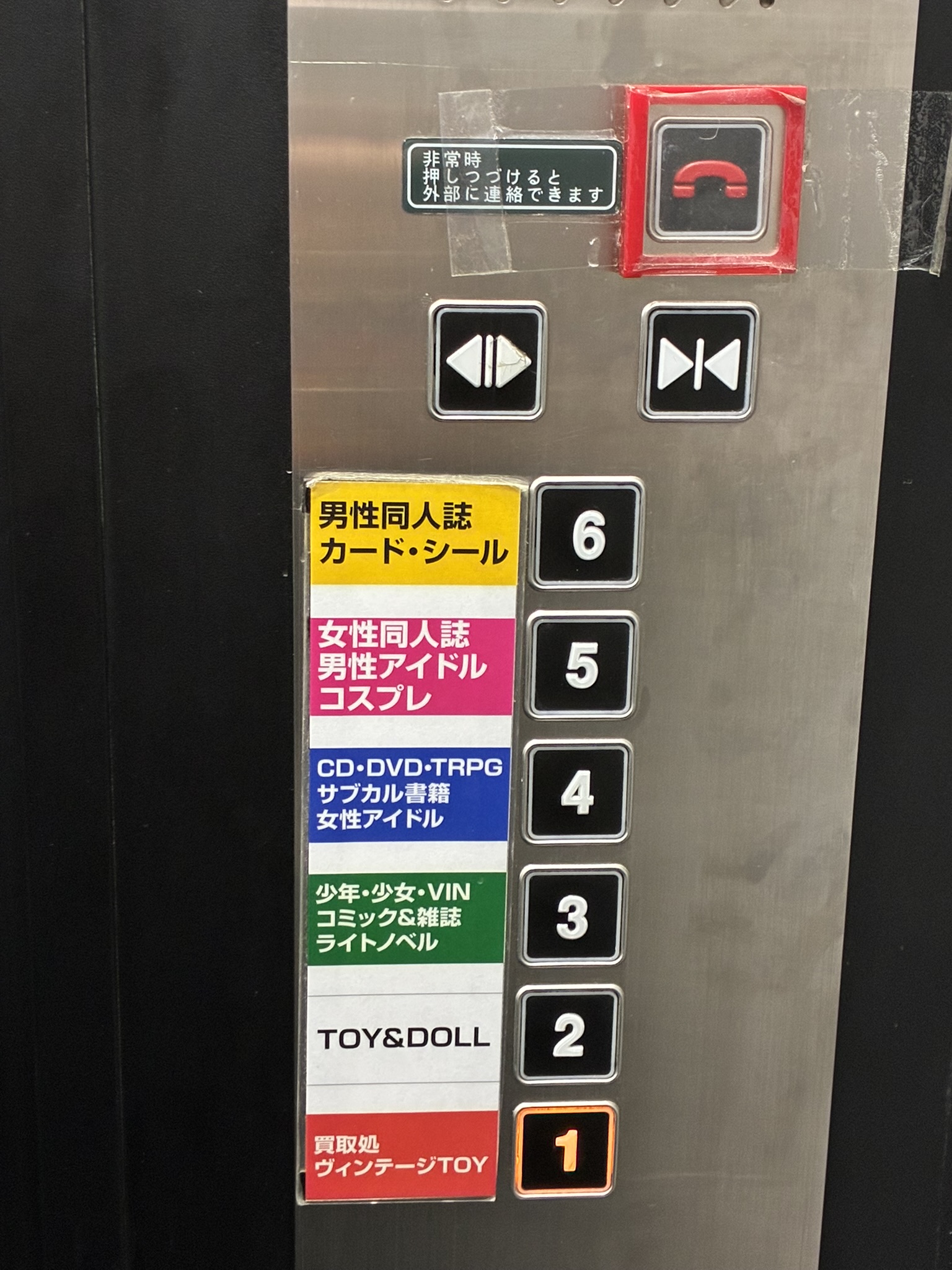
Photo by the author.
Mandarake and the Second-Hand Feeling
Mandarake is one of the places where Japanese otaku culture feels most physical. It is not only about new releases. It is about used books, older goods, figures, magazines, doujinshi, CDs, DVDs, toys, character items, and objects that already passed through someone else’s fandom life.
That second-hand feeling is important. In Japan, otaku culture often has a strong relationship with used goods. A figure, book, badge, or old magazine can move from one fan to another while carrying the feeling of a specific era. Some items are not valuable only because they are rare. They are valuable because they remind people of a time when a character, series, idol, or game mattered to them.
This is one reason Nipponbashi feels different from a normal shopping street. Many stores do not only sell products. They preserve layers of fan memory.
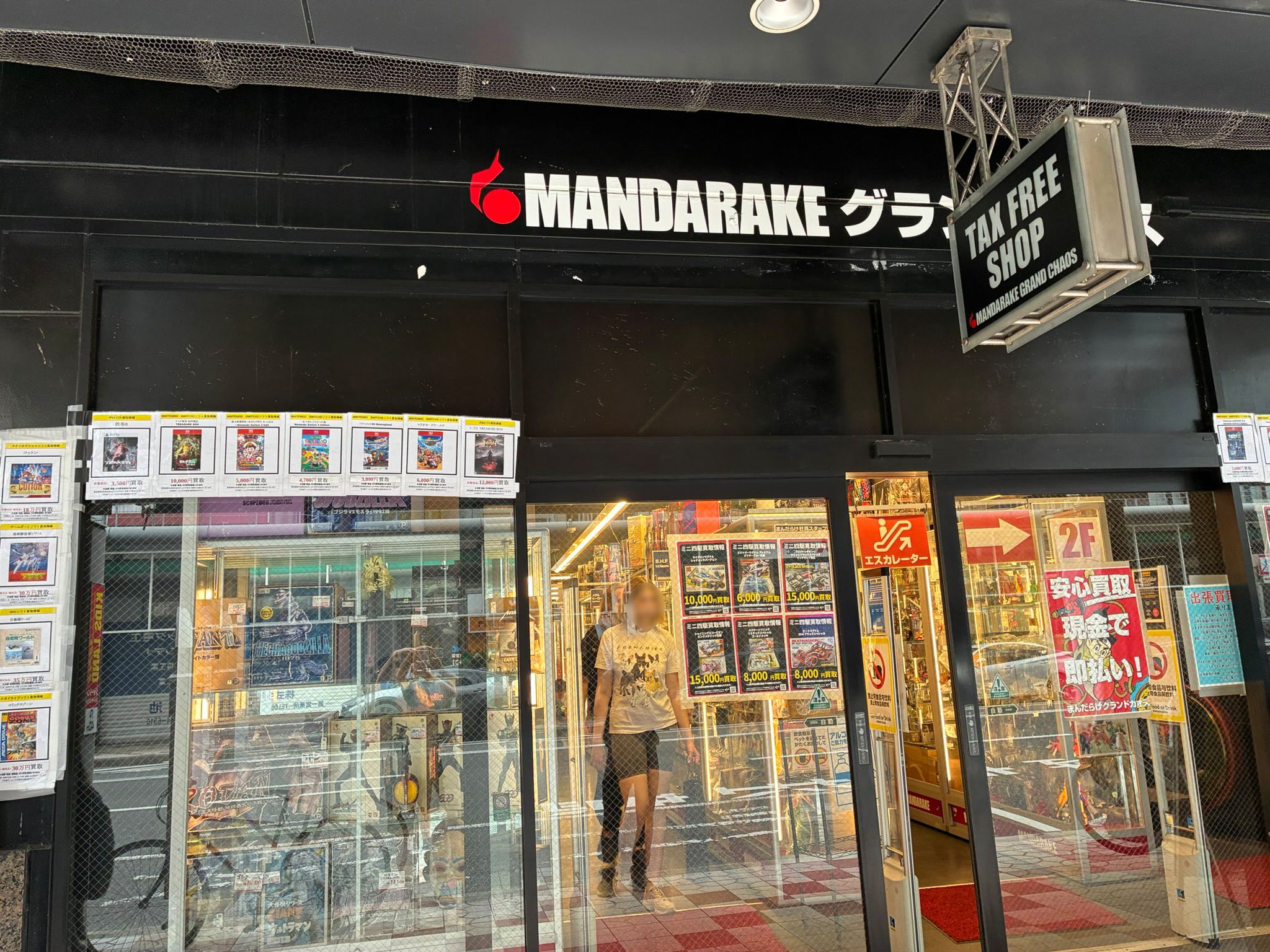
Photo by the author.
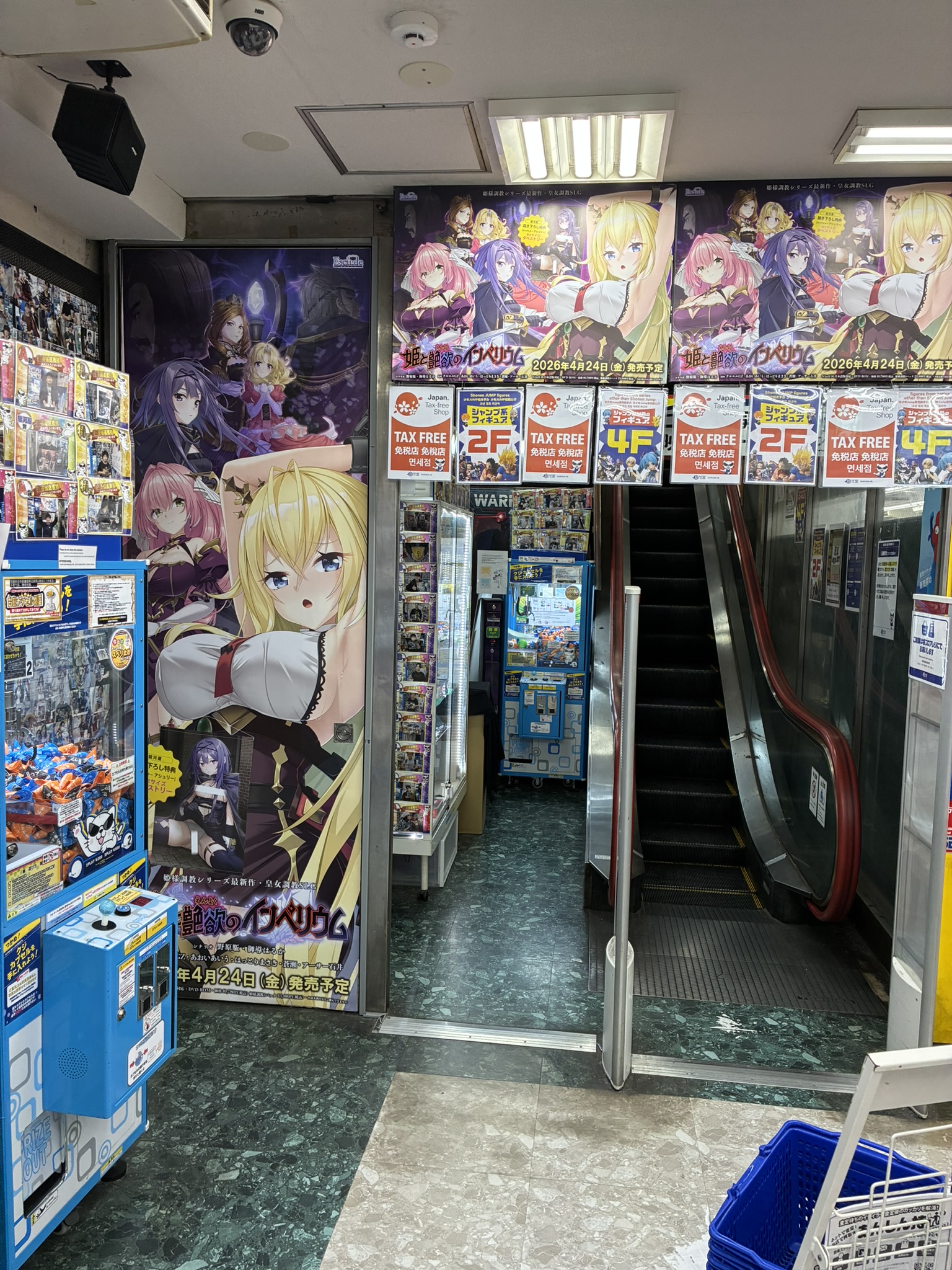
Photo by the author.
Doujin Shelves Are More Convincing Than Definitions
It is possible to explain doujin culture with words: self-published works, fan-made books, original comics, parody works, small circles, indie creators, and event culture. But for many overseas readers, the concept still feels abstract until they see shelves.
A shelf of doujin works says something that definitions cannot. It shows quantity. It shows categorization. It shows that this is not a tiny hidden hobby, but a large system with stores, buyers, labels, genres, and repeat customers.
This is why bookstore and shelf photos are useful. They show doujin culture not as a strange rumor from the internet, but as something physically organized inside Japanese otaku retail space.
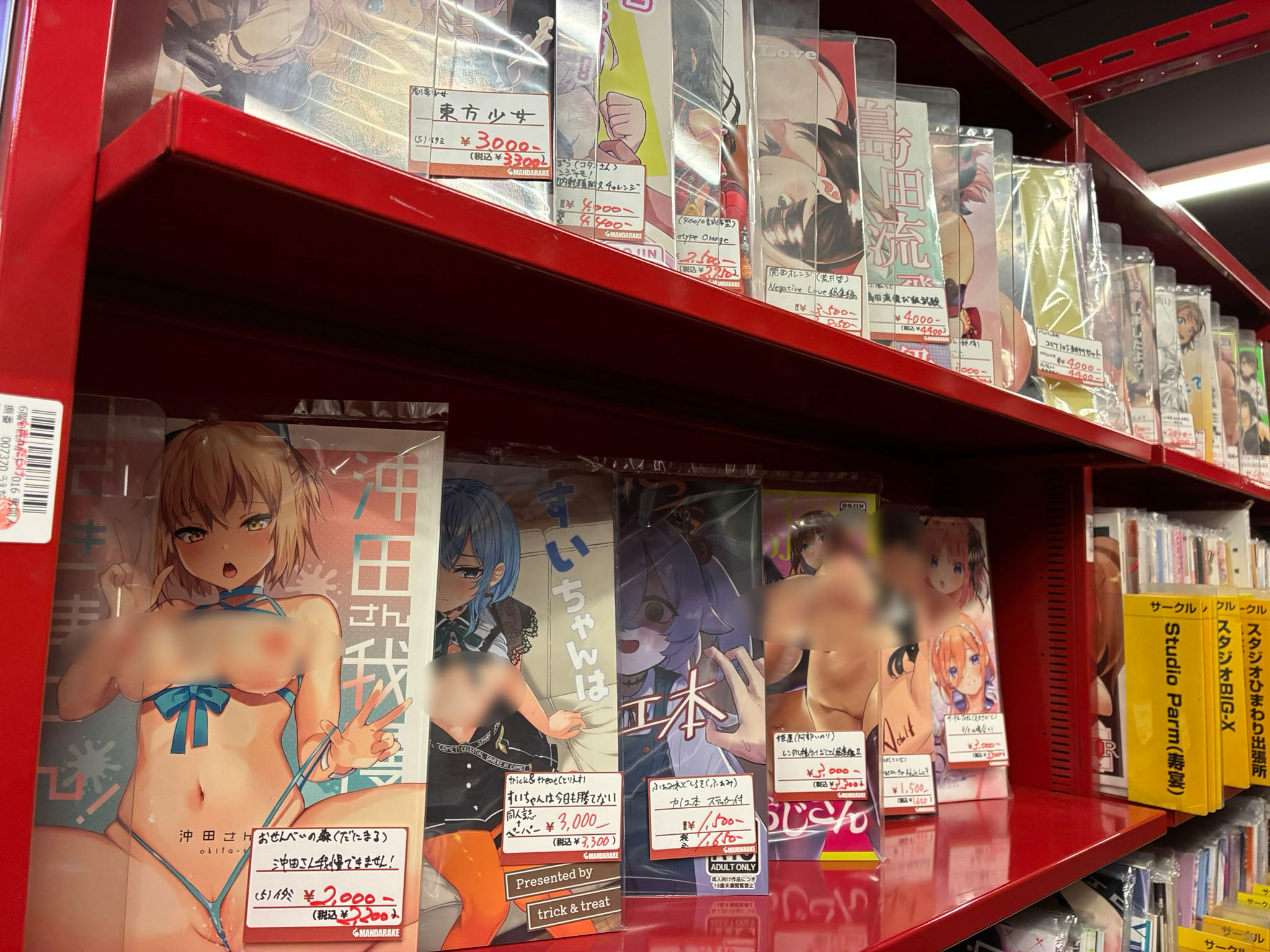
Photo by the author.
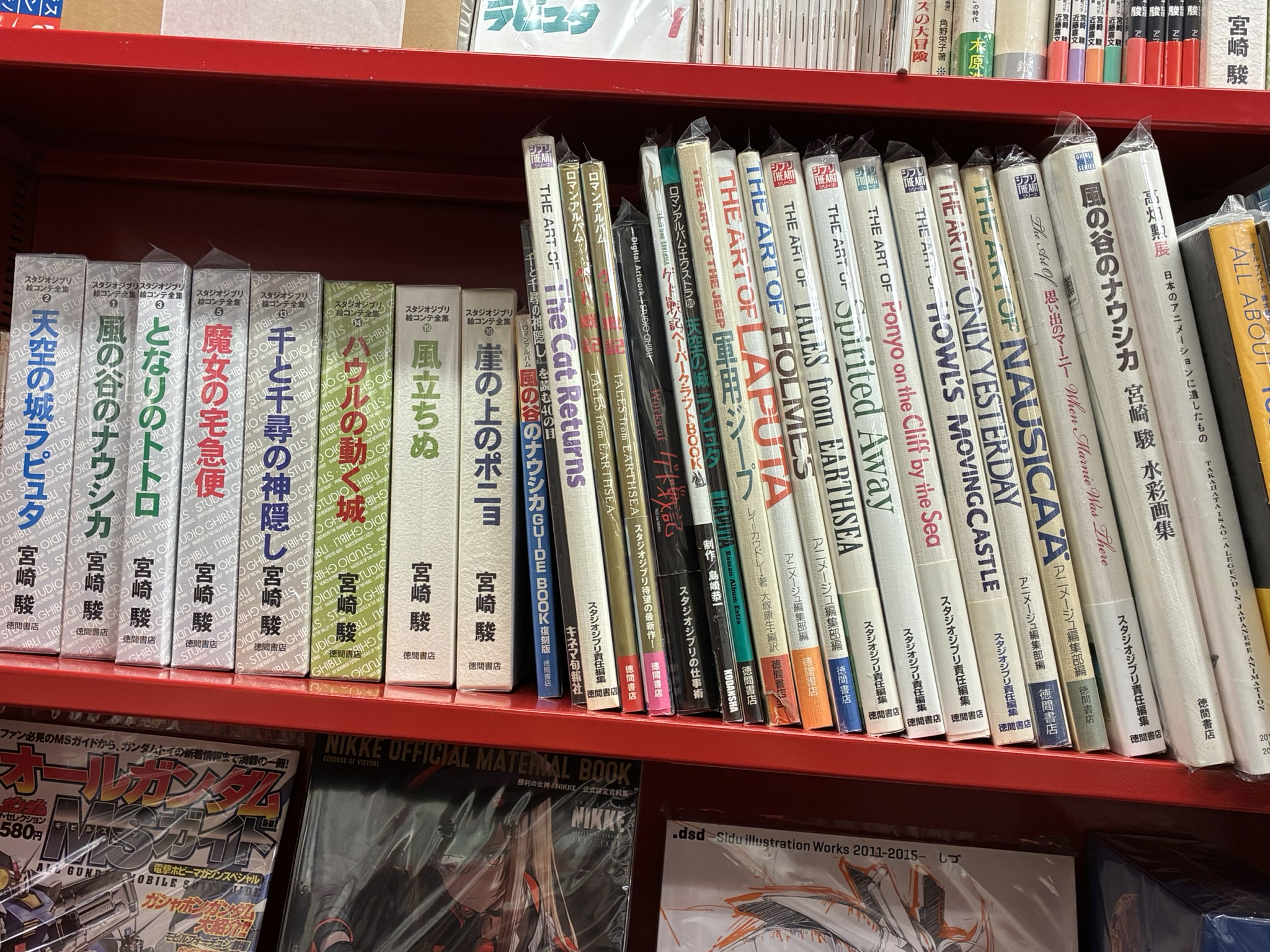
Photo by the author.
Figure Showcases: Characters Become Objects
Figure showcases are another part of Nipponbashi that feels especially strong in person. A visitor may understand that Japan sells anime figures, but seeing many second-hand figures arranged in cases gives a different impression.
The figures are not only merchandise. They are small physical versions of fictional attachment. Some fans buy them because the character is cute. Others buy them because the pose, costume, expression, or release period reminds them of a specific memory.
Second-hand figure stores also make one thing very clear: otaku culture has time depth. It is not only about what is popular this month. Characters from different years, genres, companies, and fandoms can sit together behind glass.
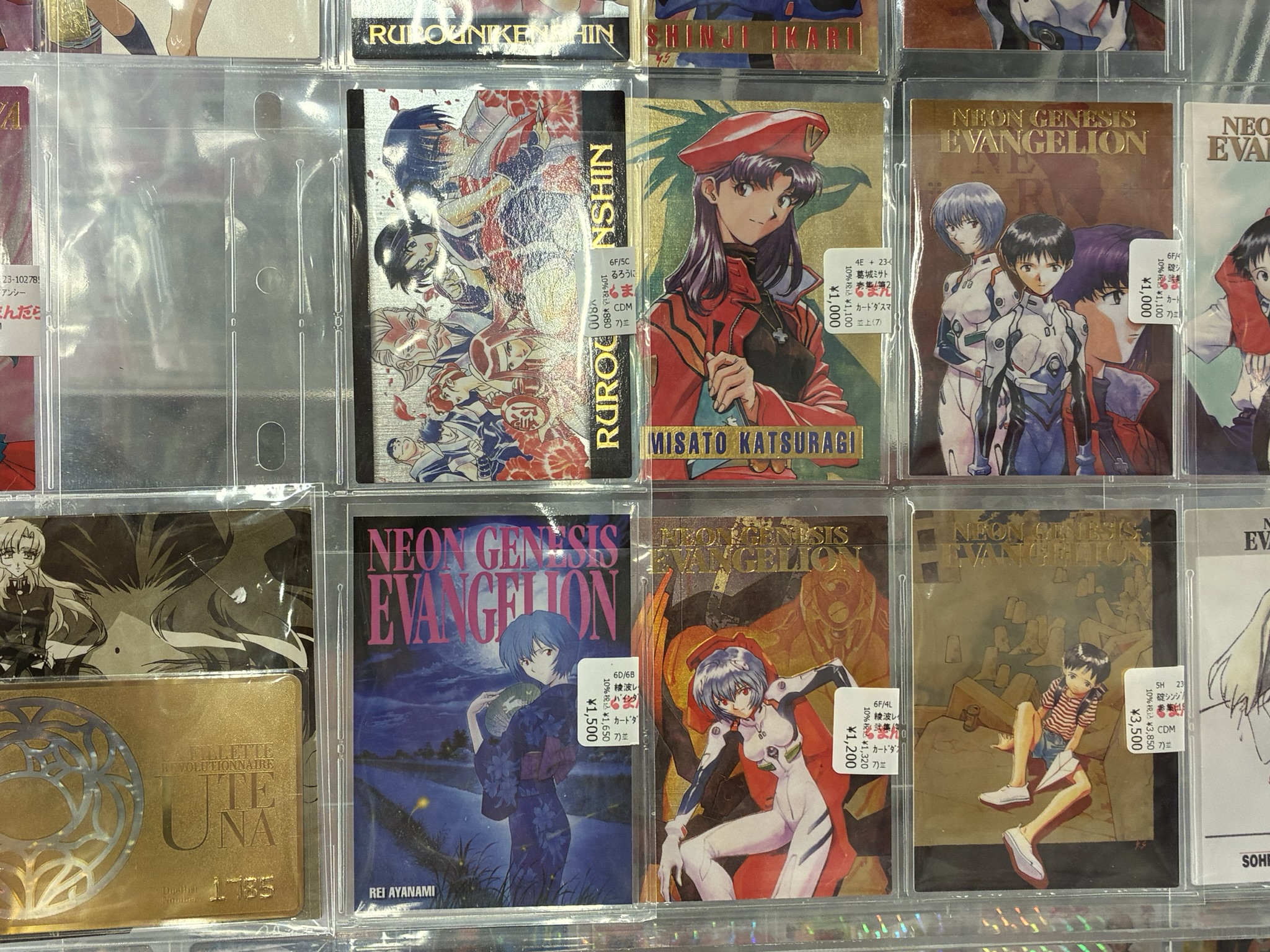
Photo by the author.
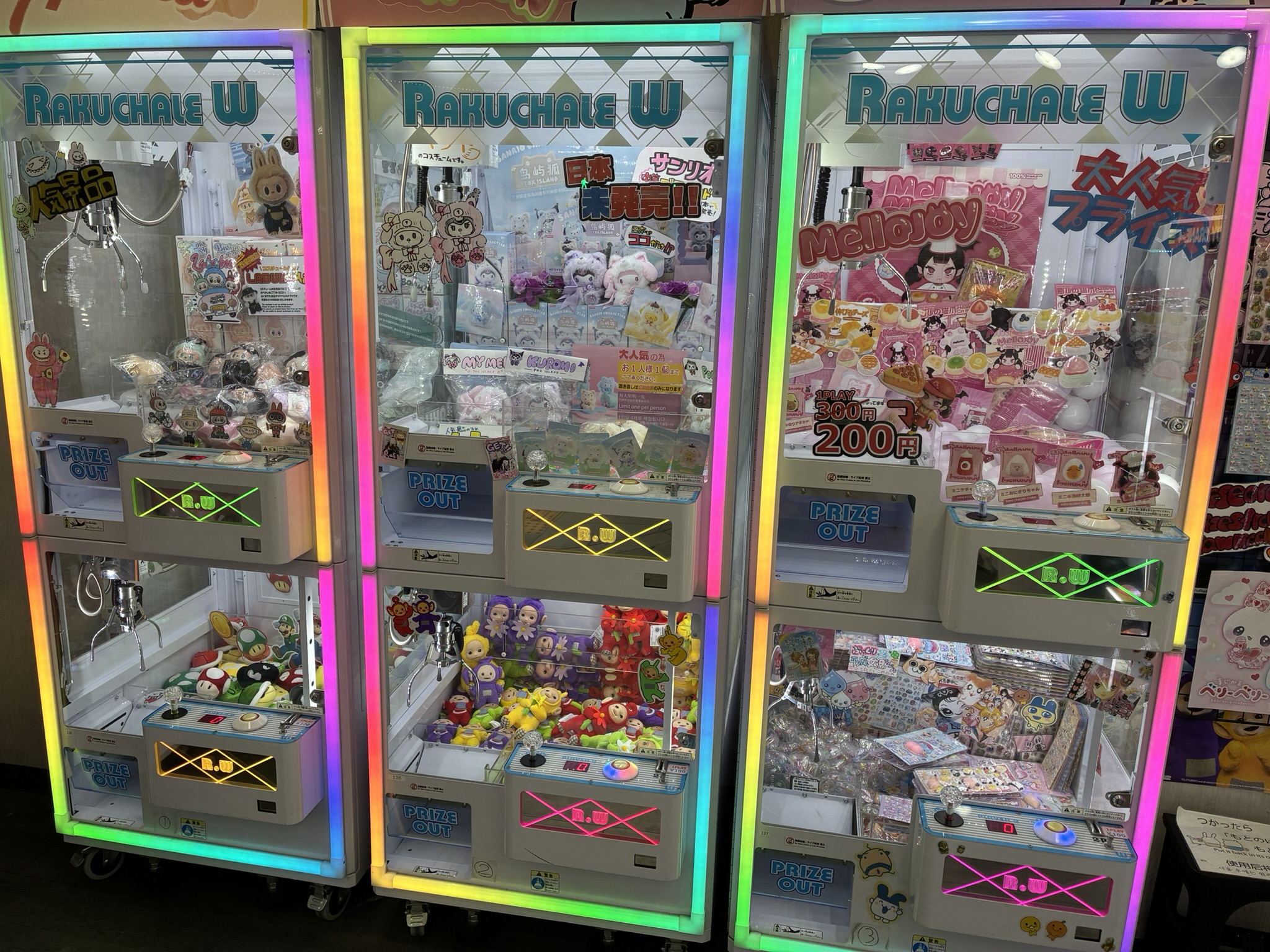
Photo by the author.
VTuber Goods Are Now Part of the Street
One of the newer things that makes Nipponbashi feel current is the presence of VTuber-related goods. For someone who only knows VTubers as livestreamers, it can be surprising to see that streaming culture has become physical retail culture.
VTubers are watched online, but in Japan they are also collected offline. Fans buy acrylic stands, badges, cards, clear files, plush toys, collaboration items, and limited goods. Stores such as FANDOM make this especially visible.
This is one of the best examples of how Japanese media culture moves between screen and street. A virtual performer can become a shelf, a display, a bag charm, a birthday goods set, a store section, and a reason to visit Nipponbashi in person.
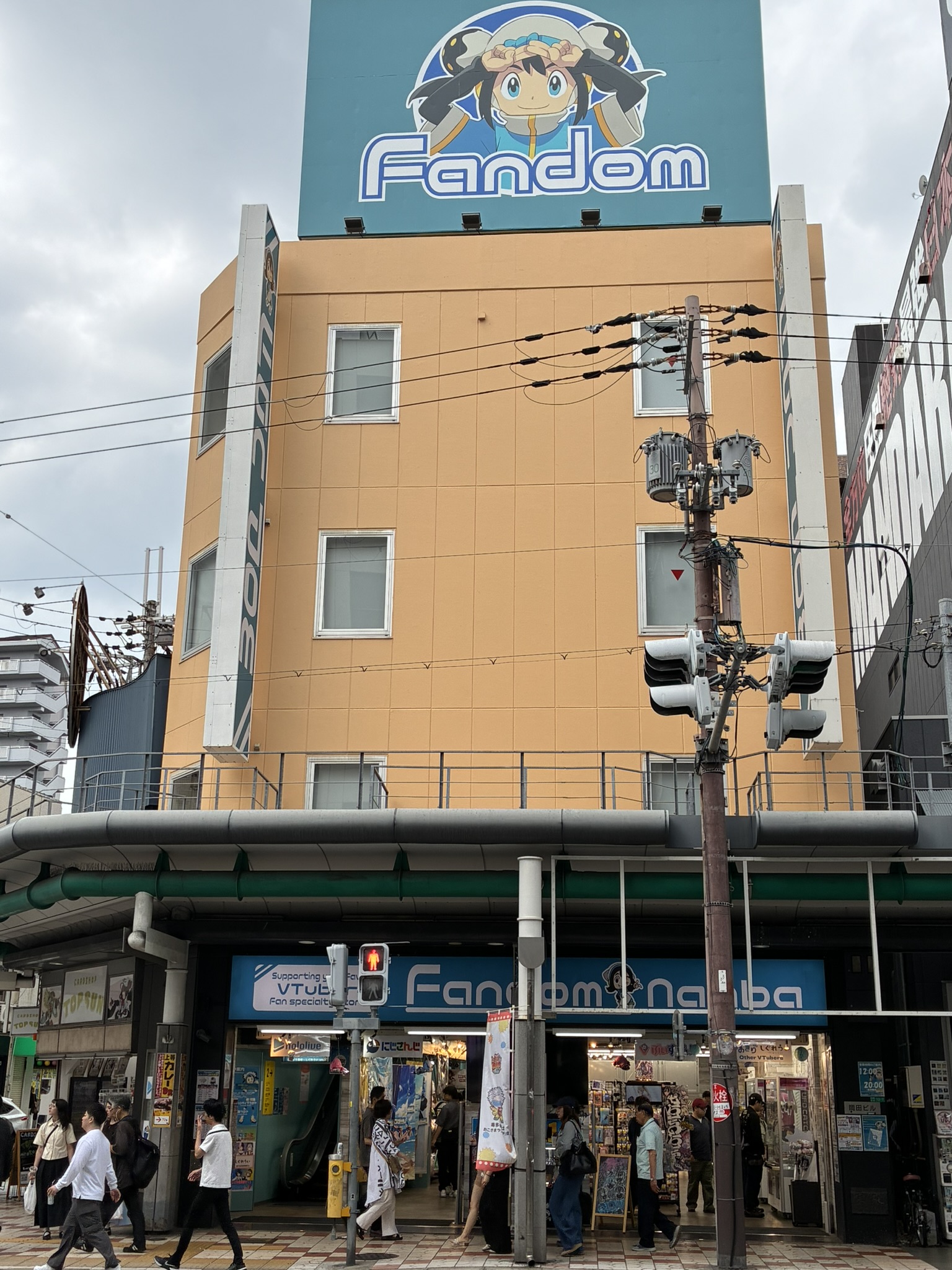
Photo by the author.
Why a Rainy Walk May Be Better for Understanding the Area
A sunny day is better for clean photos. But a rainy day may be better for understanding how the district actually works.
Rain reveals movement. It shows where people gather, which streets feel exposed, which shops become shelters, how crowds compress under roofs, and how easily a normal shopping walk becomes a physical experience.
It also removes some of the fantasy. Nipponbashi is not only a dream world of anime signs and colorful goods. It is a real Osaka neighborhood with wet pavement, narrow sidewalks, busy crossings, old buildings, and people trying to enjoy their hobbies while staying dry.
That realness is exactly what makes it worth writing about.
A Simple Walking Route for First-Time Visitors
If you are visiting for the first time, you do not need a complicated plan. A simple route works well:
- Start from the Namba or Nipponbashi area and walk toward Den Den Town.
- Check the open-air Otaku Road area if the weather is good.
- If it rains, move toward the covered shopping arcade and nearby stores.
- Look for second-hand shops such as Mandarake and Surugaya-style stores.
- Visit figure showcases and hobby shops slowly, without blocking narrow aisles.
- Check VTuber-related stores or sections if you are interested in modern streaming culture.
- Leave extra time. Nipponbashi is better when you wander rather than rush.
On Sundays, expect more people than you may imagine. On rainy Sundays, expect the covered areas to feel especially dense.
Final Thoughts
Osaka’s Nipponbashi is not only “the Kansai version of Akihabara.” It has its own texture: older electronics history, Osaka street energy, second-hand goods, doujin shelves, figure cases, VTuber stores, covered arcades, wet sidewalks, and local weekend crowds.
The most interesting part of this walk was not finding a perfect photo spot. It was noticing how the district changes when rain begins. Otaku Road becomes less comfortable, the arcade becomes more important, and the whole area feels less like a sightseeing image and more like a living otaku town.
That is the side of Japanese otaku culture I want to show on Otaku Explorer: not only the polished image, but the streets, shelves, weather, crowds, and small practical details that make the culture real.
日本語付録:雨の日の日本橋を歩いて感じたこと
日本橋オタロード周辺は、晴れている日であればアニメイトや各店舗の外観、通り全体の雰囲気を撮りやすい場所です。 ただ、雨が降ると少し印象が変わります。
屋根のないオタロード側は歩きにくくなり、人の流れは屋根のある本通り商店街や各店舗内へ寄っていきます。 日曜日だったこともあり、アーケード下は想像以上に混み合っていました。
また、雨の日は歩道や店舗入口付近が滑りやすくなります。 スニーカーやサンダル程度でも、濡れたタイルや段差、傘をたたむ人で混み合う場所では少し注意が必要です。